


Part 3 — The Body-Brain Highway: Cerebral Microcirculation & Meridian Integration

How Cerebral Circulation and Meridian Networks Nourish the Mind
Introduction: The Oxygen & Energy Demands of the Brain
Although the human brain accounts for only about 2% of total body weight, it consumes roughly 20% of the body’s oxygen and glucose. To sustain memory, executive function, and mental clarity, the central nervous system relies on an unbroken supply of blood delivered through an intricate network of blood vessels and microcapillaries.
In neuroscience, optimal cognitive function requires healthy cerebral microcirculation—the smooth flow of blood through tiny capillaries that supply individual neurons and remove metabolic bypass products.
In Traditional Chinese Medicine (TCM), this uninterrupted flow is described through the dynamics of Qi and Blood (Xue) moving along dedicated pathways—specifically the Governing Vessel (Du Mai) and the Bladder Meridian (Zu Tai Yang)—which ascend along the spine and neck directly into the Sea of Marrow (the brain).

Modern Science: Microcirculation & Cognitive Health
As we age or experience chronic stress, small cerebral vessels can undergo structural changes, leading to subtle reductions in perfusion (blood flow).
Microvascular Perfusion: Capillaries must remain flexible to deliver oxygen to deep brain regions like the hippocampus (the brain’s memory center).
Endothelial Function: The inner lining of cerebral blood vessels regulates vasodilation. Reduced nitric oxide production or systemic vascular tension can impair this adaptive blood flow.
Vascular Dementia Risk: Long-term reductions in microcirculation contribute to subclinical ischemia, subtle brain fog, and accelerated cognitive decline.
Clinical Observations from Klinic
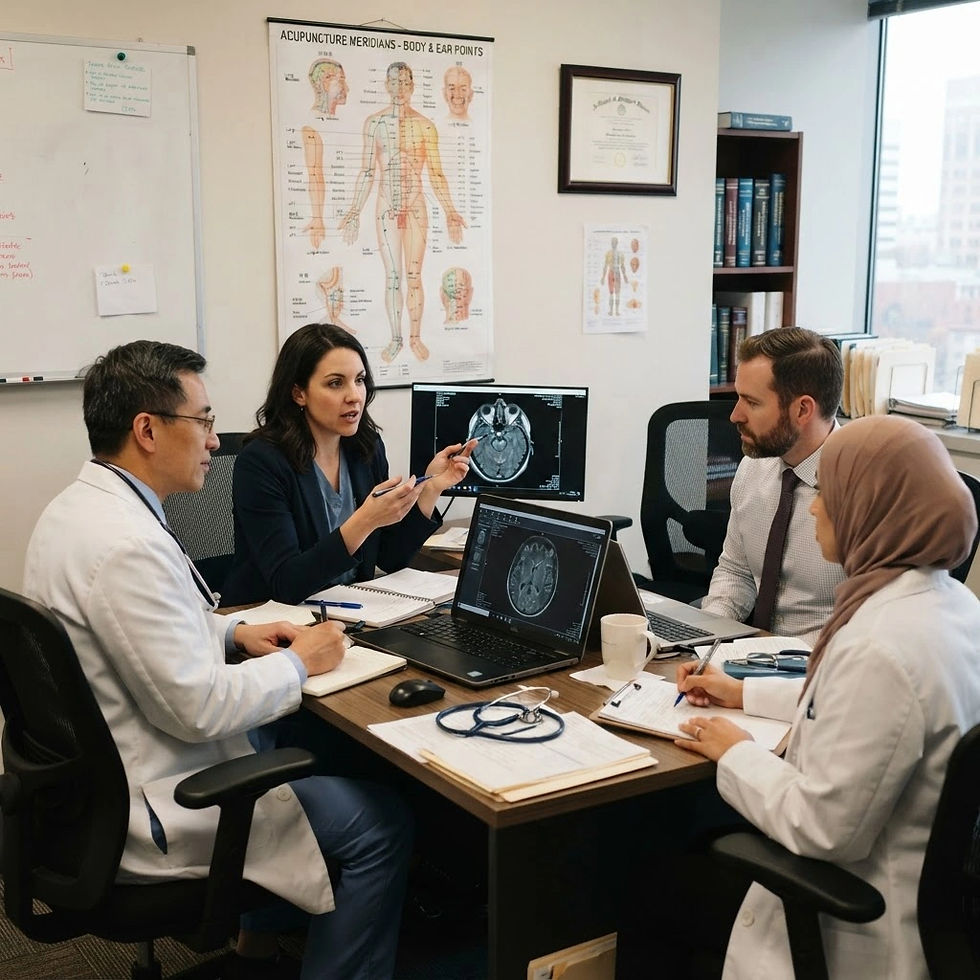
In our daily practice at Klinic, we frequently meet patients in their early 50s who are already noticing subtle yet frustrating signs of cognitive strain—such as poor sleep, reduced concentration, and frequent forgetfulness. We also see individuals presenting with early signs of pre-dementia. In these cases, relying on a single method is rarely enough. Combining targeted acupuncture with tailored herbal medicine, alongside key lifestyle modifications, consistently shows encouraging outcomes in stabilizing brain function, restoring sleep quality, and sharpening focus.
The TCM Perspective: Opening the Channels to the Brain
TCM views the brain (Sui Hai or "Sea of Marrow") as dependent on the smooth movement of Qi and Blood from the lower body and organs up to the head.
Modern Vascular Concept | TCM Meridian Equivalent | Key Clinical Focus |
Carotid & Vertebral Arterial Flow | Governing Vessel (Du Mai) | Spinal column pathway ascending directly into the brain to boost Kidney Essence and Yang Qi. |
Cerebral Capillary Perfusion | Sun Luo (Fine Collateral Network) | Tiny blood vessels and fine energetic pathways that branch out deep into brain tissue. |
Vascular Tone & Autonomic Balance | Bladder Meridian (Zu Tai Yang) | Runs along the posterior neck and scalp; regulates physical tension and sensory flow to the head. |
When Qi stagnates or Blood becomes deficient, the "Sea of Marrow" lacks adequate nourishment. In clinical terms, this manifests as fatigue, poor concentration, memory slips, or tension headaches.

How Acupuncture Intervenes: Clinical Mechanisms
Acupuncture acts as a gentle bridge between nervous system regulation and vascular hemodynamics. Clinical research demonstrates that stimulating targeted areas on the body can:
Increase Cerebral Blood Flow Velocity: Functional imaging and Doppler studies show that acupuncture can increase blood flow velocity in key cerebral arteries.
Modulate Autonomic Tone: Releasing muscular tightness in the cervical spine and suboccipital region relieves physical tension around blood vessels entering the skull, helping switch the body out of a fight-or-flight state.
Stimulate Neurovascular Coupling: Acupuncture helps match local blood supply with active neuronal demand, supporting functional connectivity and overall brain resilience.
Chinese Herbal Medicine & Cerebral Perfusion
Parallel to acupuncture, Chinese herbal pharmacology offers dynamic support for the vascular and nervous systems. Modern phytochemical research reveals that specific botanical compounds work synergistically to enhance cerebral hemodynamics. Certain classic herbs demonstrate remarkable capabilities in increasing cerebral blood flow velocity, reducing blood viscosity, and protecting endothelial cells lining the microvessels. Others influence autonomic nervous system tone and support neurovascular coupling—ensuring that oxygen and nutrients are delivered efficiently precisely where cognitive activity is occurring.
However, Chinese herbal medicine is never prescribed in a generic or "one-size-fits-all" manner. In clinical practice, a TCM practitioner begins with a thorough consultation to evaluate the patient's unique constitution, pulse, and systemic patterns. Rather than relying solely on herbs, the practitioner guides the patient through tailored lifestyle and dietary modifications. Based on this complete diagnostic picture, a personalized herbal formula is crafted—combining complementary herbs to address the root causes of circulatory slowdown while harmonizing the entire body.

Practical Takeaways for Daily Brain Health
Maintain Neck and Upper Back Mobility: Gentle cervical stretches prevent muscular tightness that restricts circulation along the posterior channels.
Aerobic Movement: Physical activities like swimming, brisk walking, or Qigong promote systemic microcirculation and nitric oxide release.
Stay Hydrated & Warm: In TCM terms, Cold contracts blood vessels and slows Qi flow; staying warm supports healthy capillary perfusion.


Comments